
A party may face a judgment issued by the Court of Appeal and believe that there is a legal or procedural defect that affected the validity of the judgment. Here, the importance of Appeal Judgment Nullity Claim becomes clear, as it is a legal procedure that requires a careful examination of the nature of the defect and its impact on the judgment.
This claim is not based merely on dissatisfaction with the outcome of the judgment. Instead, it focuses on examining whether there is a legal reason related to the validity of the judgment or the procedures upon which it was issued. Therefore, consulting an Appeal Lawyer in Kuwait helps analyze the judgment, review the case file, and determine the appropriate legal course based on the circumstances of the case.
Has an appeal judgment been issued against you and do you believe there is a legal or procedural defect that affected its validity? Do not leave the review of the judgment to chance. Lawyer Fahad Ahmed Al-Saeed can help examine the judgment and case file, identify possible grounds for nullity, and determine the appropriate legal course based on your situation.
Request an Appeal Judgment Review Now
Or continue reading to learn about the reasons and procedures for reviewing the nullity of the judgment
What Is an Appeal Judgment Nullity Claim in Kuwait?
An Appeal Judgment Nullity Claim in Kuwait is a legal procedure aimed at examining the validity of a judgment issued by the Court of Appeal and the related procedures by reviewing whether there is a substantial defect that may affect its validity or the legal effects resulting from it.
This claim concerns reviewing the legal and procedural aspects of the judgment according to the rules governing litigation. These procedures are regulated under the Kuwaiti Civil and Commercial Procedures Law and its amendments.
When Can the Nullity of an Appeal Judgment Be Examined?
Examining the nullity of an appeal judgment is not based merely on a party’s dissatisfaction with the outcome reached by the court. Instead, it is related to the existence of a legal or procedural reason that may affect the validity of the judgment or the soundness of the procedures upon which it was issued.
Therefore, the legal review begins by studying the reasons behind the judgment, the procedures followed during the consideration of the case, and the extent to which the legal safeguards established by law were observed.
What Are the Reasons for Examining the Nullity of an Appeal Judgment?
A request to examine the nullity of a judgment may be related to several legal issues, including:
- The existence of a defect in procedures affecting the judgment: This may relate to a substantial procedure that was not carried out according to the rules governing litigation, or that affected the rights of one of the parties during the proceedings.
- The existence of an issue affecting the right of defense: The guarantees of defense and enabling parties to present their claims and defenses are among the fundamental principles of litigation. Therefore, any significant defect in this aspect requires careful legal evaluation.
- The existence of a legal defect related to the judgment: The reason for examination may concern the manner in which the judgment was issued or one of its legal elements, rather than merely the result reached by the court.
What Are the Procedures for Studying an Appeal Judgment Nullity Claim in Kuwait?
Studying the claim depends on reviewing the judgment and the case file to reach a clear understanding of the nature of the legal issue and the appropriate procedure for dealing with it.
Reviewing appeal judgments and determining the appropriate methods of challenge require specialized legal experience. An Appeals Lawyer in Kuwait can assist in analyzing the judgment and its grounds and evaluating the procedure that suits the circumstances of the case.
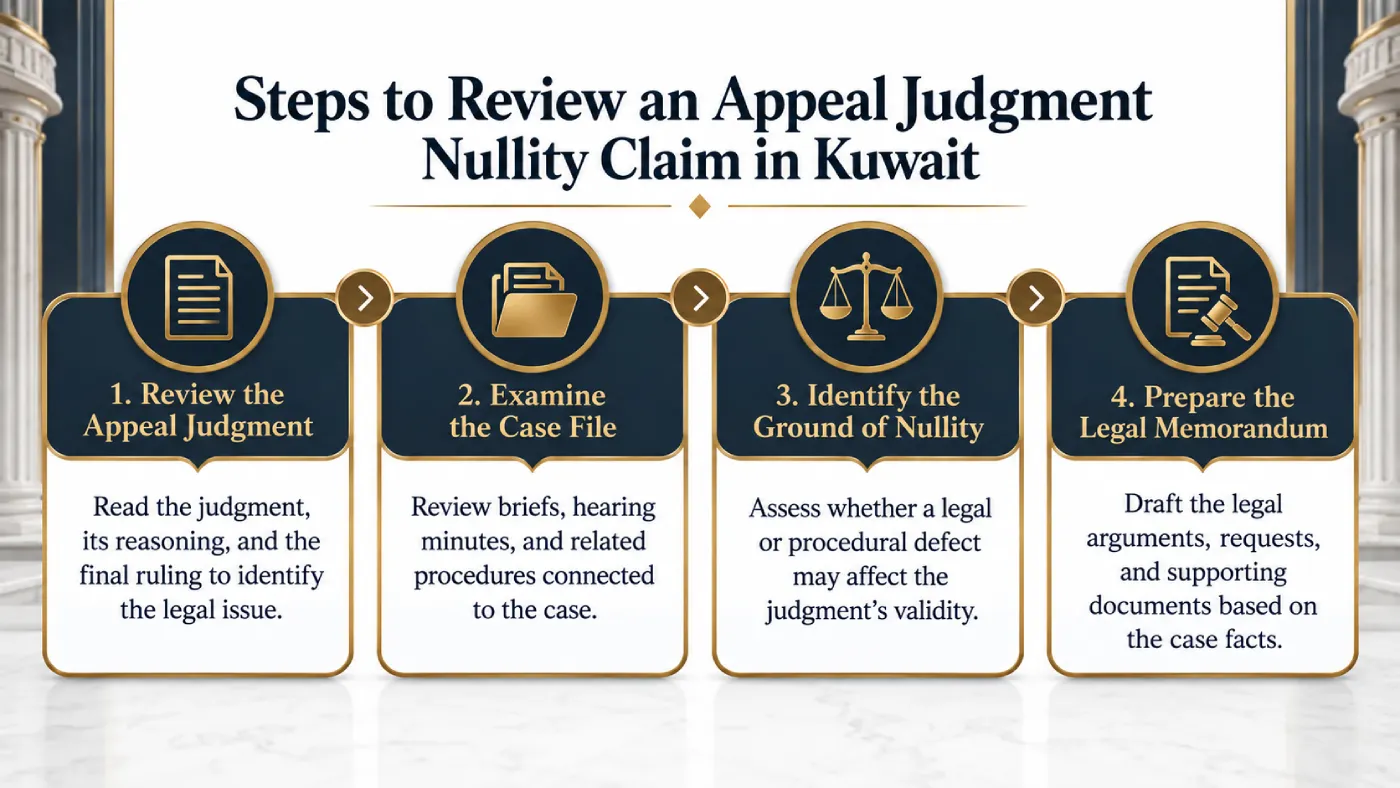
The case review process usually goes through several stages:
1. Reviewing the Appeal Judgment
The review begins by obtaining a complete copy of the judgment and examining its reasons and ruling, as reading the reasons helps understand the basis upon which the decision was made and identify the points that require legal examination.
The review may also require referring to the case file and the memoranda submitted by the parties, as the judgment alone may not reflect all procedures that took place during the proceedings.
2. Examining the Case File and Previous Procedures
The case file and previous procedures related to it are reviewed to verify the sequence of events and the defenses presented during the proceedings. This review helps determine whether there is a legal basis that can be relied upon within the claim.
3. Determining the Legal Basis of the Request
After reviewing the judgment and case file, the nature of the reason under examination is identified, whether it relates to a procedural defect or a legal issue affecting the validity of the judgment.
This stage helps formulate the request more accurately by linking the legal reason with the facts and procedures related to the case.
4. Preparing the Appropriate Legal Memorandum
Judicial procedures require precise drafting that clarifies the facts, legal basis, and requested relief.
The method of preparing legal memoranda differs depending on the nature of the case. For example, a Defense Memorandum in an Appeal for Increased Alimony differs from memoranda related to studying the nullity of an appeal judgment, because each type involves different legal issues and requests.
What Documents Are Required to Study an Appeal Judgment Nullity Claim?
The required documents vary depending on the nature of the case and the legal reason being examined. However, reviewing this type of procedure usually requires documents that help provide a complete understanding of the case.
The main documents that a lawyer usually needs to review the case file include:
- A copy of the appeal judgment under examination.
- The reasons for the judgment and its ruling.
- Memoranda submitted by the parties.
- Hearing records and procedures related to the case.
- Documents supporting the grounds of nullity.
There is no single fixed list that applies to all cases, as the nature of the required documents differs depending on the subject matter of the claim, and the stage reached by the case.
Is There a Legal Time Limit for Filing an Appeal Judgment Nullity Claim in Kuwait?
Legal deadlines vary depending on the type of procedure and the nature of the judgment being examined. Therefore, it is not possible to determine one single period that applies to all cases related to appeal judgments.
For this reason, the legal rules governing the appropriate procedure must be reviewed before taking any step, as choosing the wrong legal route or exceeding deadlines related to certain procedures may affect the possibility of proceeding with them.
Reviewing the judgment with an Attorney in Kuwait specialized in appeal cases helps determine the nature of the procedure and the related deadlines according to the circumstances of the case.
What Are the Reasons for Rejecting an Appeal Judgment Nullity Claim?
When studying an Appeal Judgment Nullity Claim, several points require attention, including:
- Relying only on dissatisfaction with the outcome of the judgment.
- Failing to identify a clear and effective legal defect.
- Confusing a retrial of the subject matter of the case with examining the validity of the judgment.
- Submitting a request that does not correspond with the nature of the judgment or the procedural stage.
Therefore, evaluating the case before taking any action helps choose the legal path that corresponds with the circumstances of the case and avoids taking steps that do not serve the intended objective.
What Is the Importance of the Legal Memorandum in an Appeal Judgment Nullity Claim?
The legal memorandum plays an essential role in presenting defenses and legal grounds before the court, especially in cases that depend on precise procedural issues.
The nature of legal memoranda differs according to the type of case. For example, preparing a defense memorandum in misdemeanor appeals requires addressing points related to criminal proceedings and their procedures, while memoranda concerning nullity focus on explaining the legal defect and its impact on the judgment.
The strength of a memorandum does not depend only on presenting facts, but also on organizing arguments and connecting them to the legal issues under examination.
Frequently Asked Questions About Appeal Judgment Nullity Claim in Kuwait
When can an Appeal Judgment Nullity Claim be considered?
An Appeal Judgment Nullity Claim may be considered when there is a legal or procedural issue that could affect the validity of the judgment. The review usually involves examining the judgment reasons, case file, and procedures followed during the proceedings to determine whether there is a valid basis for the claim.
What documents are needed to study an Appeal Judgment Nullity Claim?
The documents required usually include a copy of the appeal judgment, its reasons and ruling, memoranda submitted by the parties, hearing records, and documents related to the alleged grounds of nullity. The required documents may vary depending on the circumstances of each case.
Is there a specific deadline for filing an Appeal Judgment Nullity Claim in Kuwait?
The applicable deadline depends on the nature of the legal procedure and the type of judgment involved. Since procedures may differ according to the circumstances of each case, the relevant legal rules should be reviewed before taking any action.
Why may an Appeal Judgment Nullity Claim be rejected?
An Appeal Judgment Nullity Claim may face issues if it is based only on disagreement with the judgment outcome, without identifying a clear legal or procedural defect. The request should be connected to a specific legal basis affecting the validity of the judgment.
An Appeal Judgment Nullity Claim in Kuwait requires careful legal examination because it involves investigating the existence of a legal or procedural defect that may affect the validity of the judgment, rather than merely objecting to the outcome.
The correct step begins with reviewing the judgment and case file and determining the appropriate legal course based on the details of the case. If you need an evaluation of your legal position, you can Schedule an Appointment with Lawyer Fahad Ahmed Al-Saeed to review the judgment and related documents.
Related Legal Articles:
- Filing an Appeal Claim in Kuwait: What should be decided before challenging the judgment?
- Enforcement of an Appeal Judgment in Kuwait.
Legal Disclaimer: This article is provided for general legal awareness purposes only and does not constitute legal advice or create an attorney-client relationship. Legal procedures and effects vary depending on the details of each case, the available documents, and the procedural stage reached by the claim.
Sources:
Kuwait Ministry of Justice – Civil and Commercial Procedures Law No. 38 of 1980 and its amendments.

A lawyer in Kuwait (Registration No. 3097) specializing in Court of Cassation cases, constitutional lawsuits, and litigation management. Through this personal platform, he provides precise and methodical legal explanations of litigation procedures and the principles of drafting legal memoranda. His aim is to provide readers with clear procedural knowledge to protect their rights and reduce the risks arising from procedural errors and missed legal deadlines